

The tenant’s bond money can be released after the end of their tenancy. A landlord must show the tenant proof, such as a receipt, for any claims they make against the bond.
This information is applicable to:
- residential tenancies
- long stay tenants in residential parks.
Boarders and lodgers bonds are managed by the landlord, so the following information does not apply.
On this page:
- Before you apply to release the bond
- Claims against a bond
- Starting the bond release
- Dispute or no response
- When your bond hasn’t been lodged
- Need help? Before you apply to get the bond back – advice for tenants
Before you apply to release the bond
The easiest way to get a bond released is when everyone agrees. Landlords and tenants should try to agree on a fair amount for any claims before submitting the release. Disagreeing about how the bond is paid out will take longer.
Once the tenancy agreement has ended, you can do a few things to help get your bond money back.
- ensure the rent is paid up to and including end of the agreement or notice period if ending the tenancy early
- remove all furniture and personal items
- repair any damage more than ‘fair wear and tear’
- clean the rental property to match the original condition when you moved in
- return all keys and other items the landlord gave you for the property when you moved in e.g. garage door device
- allow time for a final inspection and any quotes for repairs
- negotiate a fair amount with the landlord for any claims they have.
Going over the moving out checklist may help you with everything you need to know for a smooth and stress-free exit.
Moving out of a rental checklist .
Final inspections
You need to allow the landlord time to organise a final inspection. You have the right to be at the home during the inspection.
Take a copy of the property condition report (PCR) from the start of the tenancy. Compare the PCRs from the start and end of the tenancy to figure out if something is fair wear and tear or damage.
Once the final inspection has been completed, you should receive a copy of the Property Condition Report (PCR). You will need to allow enough time to get quotes for any repairs and gather information.
Claims against a bond
Landlords must clearly list claims under the set categories on the release application. Landlords should talk to the tenant about any claims and come to a fair agreement. Tenants have the right to disagree about the claim.
Tenants and landlords may be asked to provide evidence at a later stage.
More information is on Making a claim against a bond.
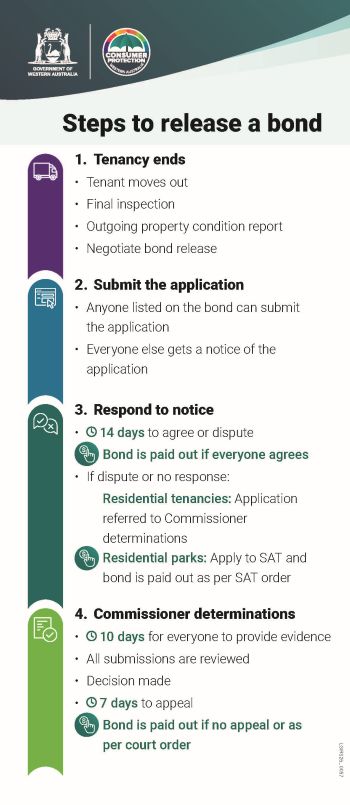
Starting the bond release
Anyone on the bond can start the process to release the bond.
Information about what you need to do when a tenant has passed away is available on Death of a tenant or landlord.
Agents
Agents must use BondsOnline to submit a release. Written explanation is required if you can’t use it for a particular bond.
Private landlords
Private landlords can use BondsOnline or the paper-based application form.
You will need to set up an account with MyAccount to use BondsOnline. See register for BondsOnline for step-by-step instructions to set up your MyAccount.
Tenants
Tenants can use the paper-based application form.
When a tenant has died
Information about what you need to do when a tenant has passed away is available on Death of a tenant or landlord.
Bonds paper-based forms
- Bonds release e-form complete some details and create a PDF online to print and sign.
- Download a blank release form PDF to fill out offline.
Details on how to submit your paper bonds form is available on the Bonds manual form page.
Notice of release application
Anyone who hasn’t signed the release application will be notified (by email or letter) when a release application is made.
Everyone listed on the bond should:
- check the details, and
- respond by the required date stated on the notice.
The bond can be paid out when everyone agrees to the release and claims made against the bond.
Dispute or no response
Residential tenancies
The release application will be referred to Commissioner determinations if it is:
- disputed or
- not everyone responds within the set timeframe.
Everyone is notified, and the bond is held until a decision is made and:
- the appeal period ends or
- a court order is issued.
For more information about the process, please visit Bond disputes.
Residential parks long-stay tenancy
The process stops when someone disputes the bond release, or not everyone responds in time. Everyone involved will be told this has happened.
A park operator or tenant can apply to the State Administrative Tribunal (SAT) for a decision on how the bond will be paid out.
For more information about the SAT process, visit the SAT page - Residential parks, caravan parks and camping grounds.
When your bond hasn’t been lodged
You can’t start the release if your bond hasn’t been lodged.
Make a complaint to us if your bond has not been lodged. Your landlord will be contacted to lodge the bond and start the release process. This can take some time to resolve.
Contact us on 1300 30 40 54 or email to check if your bond has been lodged.
Need help?
Please contact us 1300 30 40 54 for advice if you need any help with releasing a bond.
You can also seek legal advice on tenancy issues from Circle Green.
Rent reforms video